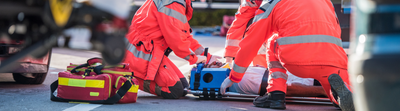
A first aid kit only helps if it's actually stocked with the right supplies and ready to use when something goes wrong. This checklist covers everything a real first aid kit should have in 2026 — from basic wound care to trauma response — plus how to pick the right kit for your home, vehicle, workplace, or next outdoor trip, and how to keep it ready instead of letting it quietly go stale in a closet.
Be Prepared with the Right First Aid Kit
Accidents happen anywhere — at home, in the car, at work, or out on the trail. A properly stocked kit lets you handle minor injuries immediately and stabilize serious ones until real help arrives. The gap between "has some bandages" and "actually prepared" comes down to what's inside, so here's exactly what to look for.
That gap matters more than most people assume. Emergency response, even when it's fast, still takes real time — and for anything involving serious bleeding, the first few minutes are often what determines the outcome. A kit that's actually equipped for trauma, not just scrapes and splinters, is what closes that gap while help is on the way.
Essential First Aid Kit Supplies for Any Emergency
A real first aid kit is more than a box of bandages — it's your first line of defense. Here's the full list, organized by category.
Basic Wound Care & Bandages
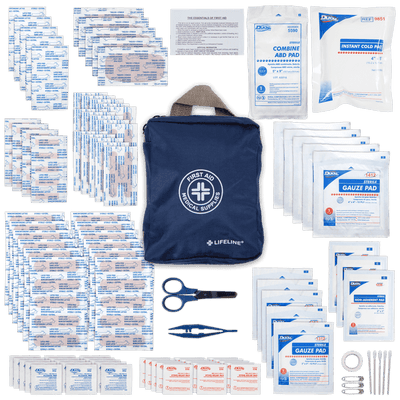
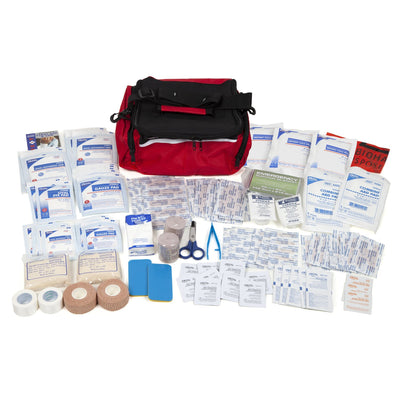
- Adhesive bandages (assorted sizes) — for minor cuts, scrapes, and blisters.
- Sterile gauze pads and rolls — for covering larger wounds and absorbing blood.
- Adhesive medical tape — secures bandages and dressings in place.
- Antiseptic wipes and ointments — prevent infection by cleaning wounds before bandaging.
Trauma & Emergency Response Supplies
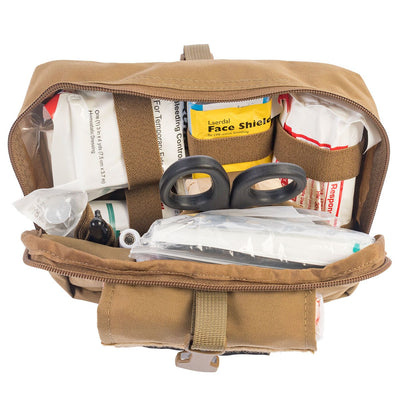
- Tourniquet — controls severe bleeding in critical situations.
- Israeli bandage / pressure dressing — designed for heavy bleeding and trauma care.
- Chest seals — vital for treating puncture wounds to the chest or back.
- Instant cold packs — reduce swelling and ease pain from sprains or burns.
- CPR face shield — provides a protective barrier during resuscitation.
Personal Protection & Medical Tools
- Nitrile gloves — prevent contamination and keep wounds sterile.
- Trauma shears — cut through clothing or bandages quickly in an emergency.
- Tweezers — remove splinters, debris, or stingers safely.
- Digital thermometer — monitors body temperature in case of fever or heat exhaustion.
Specialized Items for Long-Term Preparedness
- Burn gel and dressings — soothe and protect minor burns.
- Emergency blanket — helps retain body heat in shock situations.
- Eye wash solution and pads — flushes out debris and soothes eye injuries.
- Oral pain relievers and allergy medications — for pain and allergic reactions.
"In the field, you don't have time to second-guess your equipment. When seconds matter, you need medical-grade gear that's organized, reliable, and ready to deploy."
— Mark D., EMT-P (Paramedic) and Tactical Safety Instructor
Is Your Kit Ready-to-Use, or Just Stocked?
There's a real difference between a box of supplies and a kit that meets a real standard, like ANSI/ISEA Z308.1, the industry benchmark for workplace first aid kits. Run through this quick self-check:
- Are your supplies organized in modular, labeled sections rather than loose in a bag?
- Do you have real trauma supplies on hand — a tourniquet, a pressure dressing — not just basic bandages?
- Are your items clearly labeled with expiration dates you actually check?
If you answered no to any of these, your current kit may leave you less prepared than you think in a real emergency.
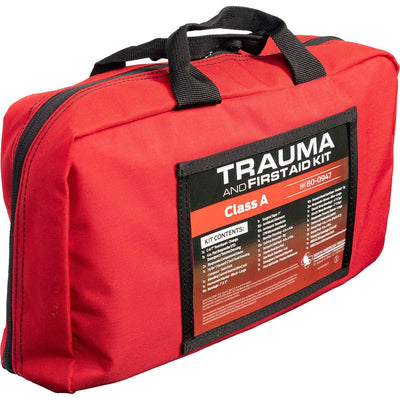
Class A vs. Class B, briefly. Under the ANSI/ISEA Z308.1 standard, Class A kits cover the baseline for lower-risk environments like offices and retail — major and minor wounds, minor burns, eye injuries. Class B kits step up with higher quantities plus two items Class A doesn't require by default: a splint and a tourniquet, built for higher-risk settings like construction sites and warehouses. Some Class A kits, including ours, add a tourniquet as an enhancement beyond the baseline requirement — worth checking exactly what's included rather than assuming from the class label alone.
Choosing the Right First Aid Kit for Your Needs
Not every kit needs the same contents. The right kit depends on where it'll live and what it needs to handle:
Home & Personal. Wound care, over-the-counter medication, and basic tools for cuts, burns, and sprains. Add any personal medications or child-specific supplies your household needs. Best for homes, apartments, dorms, and everyday personal use.
Car & Travel. A compact, glove-box-friendly kit with an emergency blanket, flashlight, seatbelt cutter, and accident report form on top of the basics. Best for personal vehicles, fleet vehicles, road trips, and RVs.
Workplace & OSHA-Compliant. Should meet OSHA and ANSI/ISEA Z308.1 standards — multiple trauma dressings, an eyewash station, burn care, and a CPR mask, not just adhesive bandages. Best for offices, warehouses, construction sites, and industrial workplaces.
Survival & Trauma. Built around hemorrhage control: tourniquets, hemostatic gauze, chest seals, and pressure dressings. Consider pairing with bug-out-bag additions like water purification tablets and a multi-tool. Best for first responders, CERT teams, and serious outdoor adventurers.
Outdoor & Sports. Lightweight and weather-resistant, with blister treatment, insect sting relief, elastic bandages, and hydration salts. Best for hikers, campers, athletes, and outdoor enthusiasts.
A few things worth checking regardless of which type you pick: the kit meets a real industry standard rather than just looking full, the size actually matches how many people and how long it needs to cover, and it's portable enough that it'll actually get taken along instead of left behind.
Where to Get the Right Kit
Safety Kits Plus carries first aid and trauma kits built for every situation above. A few of our most popular picks, covering everyday use, sports, workplace compliance, and serious outdoor trauma response:
Browse our full First Aid Kits collection, or see our trauma kit guide if you need something built specifically for severe bleeding response.