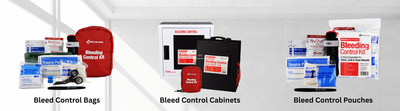
Having the right equipment can mean the difference between life and death. For agencies across the United States, emergency trauma kits aren't just a recommendation. They're a critical necessity. Trauma kits empower non-medical responders. They build real preparedness for high-risk scenarios, and a standardized design makes them reliable. This guide covers what your agency needs to know about trauma kits in 2026: what belongs in one, how to customize for your team, where the law is heading, and how to keep them ready.
Quick Answer: What Belongs in a Trauma Kit
- Core components: tourniquets, hemostatic gauze, chest seals, pressure dressings, airway tools, trauma shears, and a hypothermia blanket.
- Compliance: state bleeding-control laws increasingly require a tourniquet, compression bandage, hemostatic dressing, trauma shears, and gloves at minimum.
- Placement: one kit per vehicle, kits in classrooms and common areas, plus individual carry kits for field staff.
- Customize by role: law enforcement adds extra tourniquets, EMS adds triage tags, schools build around their state's minimum standard.
Full breakdown by category is below.
Why Trauma Kits Are Critical for Emergency Response Teams
Uncontrolled bleeding is the leading cause of preventable death in trauma cases. It causes roughly a third of all trauma-related deaths. The data on tourniquets makes the stakes clear. One study of wounded troops and civilians found a 92% survival rate when a tourniquet was used on a limb injury. Among those with uncontrolled limb bleeding and no tourniquet, there were no survivors. That gap is the entire reason the Stop the Bleed movement exists. It's why agencies that equip and train their people on trauma kits see better outcomes than those that don't.
Trauma kits built to align with FEMA emergency-preparedness guidance help ensure every responder has access to effective, standardized tools, regardless of location or the nature of the emergency. Compliance obligations can still vary by state and by sector, though. We always recommend confirming your exact requirements with your own compliance team alongside outfitting your responders.
Outfitting an Agency or Team? Let's Build Your Trauma Kit Program.
Request a Trauma Kit QuoteThe Compliance Landscape Is Shifting Fast
Bleeding-control requirements have moved from "best practice" to "the law" in a growing number of states. The trend is speeding up heading into the second half of the decade. California was among the first to mandate Stop the Bleed-style equipment across private and public buildings, back in 2022. West Virginia's Stop the Bleed Act requires every county board of education to run a bleeding-control program starting with the 2025–2026 school year. That means kits in classrooms and common areas, drills that cover them, and staff training every other year. Washington State's own school mandate takes effect for 2026–2027. It requires districts to have kits in place and staff trained on their use.
Most of these state requirements converge on a similar core kit standard. At minimum: a tourniquet, often required to meet U.S. Department of Defense certification standards, plus a compression bandage, a hemostatic dressing, trauma shears, gloves, and clear instructions. If your agency operates across state lines or serves schools and public buildings, treat this as a moving target. What's optional today in one state is very likely to be mandatory within a budget cycle or two.
Essential Components of a Trauma Kit
Trauma kits are critical tools for managing life-threatening injuries. Specific requirements vary by agency and by state, but a few components are universal:
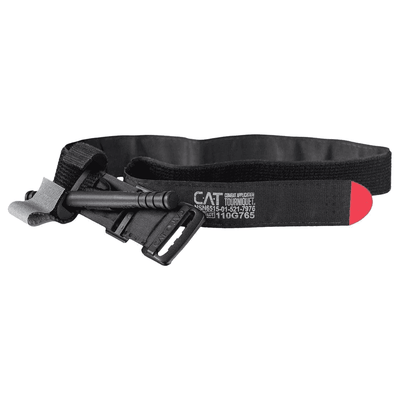
- Tourniquets: control severe bleeding from arms and legs. Look for combat-proven models that are easy to apply under stress.
- Hemostatic gauze: an advanced dressing that speeds up clotting, even in tough conditions.
- Chest seals: treat open chest wounds. They keep air from entering the chest cavity, which lowers the risk of lung collapse.
- Pressure dressings: manage severe external bleeding by holding steady compression on the wound.
- Airway management tools: nasopharyngeal airways (NPAs) keep an unconscious patient's airway open.
- Trauma shears: durable, sharp shears that let responders cut through clothing and bandages fast.
- Hypothermia prevention blankets: lightweight blankets that help hold body heat and prevent shock.

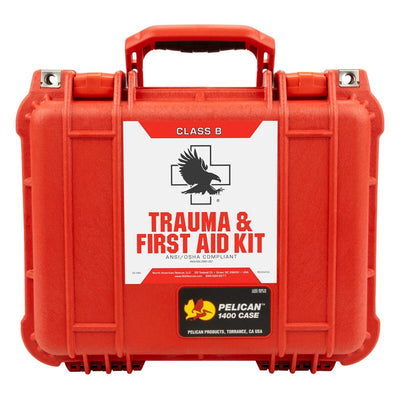
The Trauma First Aid Kit Hard Case - Class A meets ANSI/ISEA Z308.1-2021 standards for workplace trauma response.
Top 12 Essential Items for Organizational Trauma Kits
For agencies building or standardizing a fleet of kits, this is the core loadout to work from:
- Tactical tourniquets (CAT or SOF-T)
- Hemostatic gauze (QuikClot or Celox)
- Chest seals (HyFin or Halo)
- Pressure dressings (Israeli bandage)
- Nasopharyngeal airways (various sizes)
- Trauma shears (7.5" minimum)
- Hypothermia prevention blanket
- Burn dressings
- Occlusive eye shield
- Needle decompression kit
- Oral airways (various sizes)
- Tactical flashlight
How Trauma Kits Improve Operational Efficiency
Emergency response agencies operate in high-pressure environments where every second counts. Well-built trauma kits are designed not only to save lives but also to streamline operations:
Standardized equipment for faster decisions. Standardized tools and supplies cut down on confusion during emergencies. Responders know exactly what to expect in every kit. That lets them focus on treatment, not searching for missing items. Agencies running mixed fleets of kits, different brands, different layouts, restocked ad hoc, report the opposite problem. Seconds get lost when a responder reaches for a tool that isn't where it usually is.
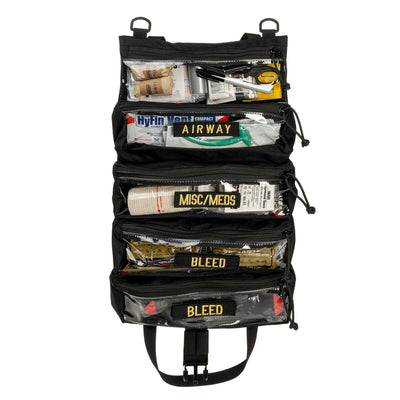
Modular design for quick access. Many kits feature modular compartments. Responders can grab specific tools without rummaging through the entire kit, so supplies like hemostatic gauze or pressure dressings stay easy to find under stress.
Scalability for large-scale events. In mass casualty incidents or disasters, pre-packed kits simplify logistics and speed up distribution across teams. A station of ten identical kits can be handed out and put to use right away, with no time spent explaining contents.
Where to Station Your Trauma Kits
A trauma kit only helps if it's within reach when seconds matter. Where you place it depends on the setting.
Vehicles and patrol units. One kit per vehicle, not a shared kit across a fleet. A kit on the wrong vehicle when it's needed doesn't help anyone.
Schools and workplaces. Kits belong in classrooms, hallways, and common areas, at the same density as fire extinguishers. Don't lock them away in a single administrative office. The state mandates above are clear on this point: accessible common-area placement, not central storage.
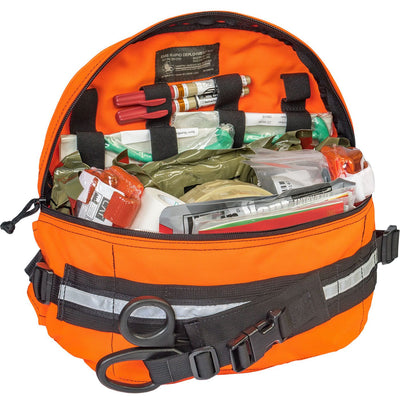
Individual carry. Officers, security staff, and field responders benefit from a compact, body-worn kit, in addition to any larger station or vehicle kit. Self-aid and buddy-aid in the first minute often decides the outcome before EMS arrives.
Customizing Kits for Specific Agencies
Law enforcement: active shooter & field response kits. For law enforcement, kits should prioritize rapid hemorrhage control and officer self-aid. Think extra tourniquets, chest seals, and compact trauma dressings.
EMS teams: mass casualty incident add-ons. EMS kits benefit from extra triage tags, pediatric-sized equipment, and portable suction devices.
Military & CERT teams: extended-duration mission packs. For extended missions, add water purification tablets, extra rations, and a fuller set of medications.
Schools & workplaces: compliance-first programs. Given the legislative trend above, schools and employers are best served by kits built around their state's minimum standard. Layer on staff training and a clear placement map tied to the building's emergency plan.
Agencies that equip their teams with kits tailored to their mission consistently report the same pattern: faster access to tools, fewer moments lost searching for the right supply, and better coordination across a team using the same standardized loadout.