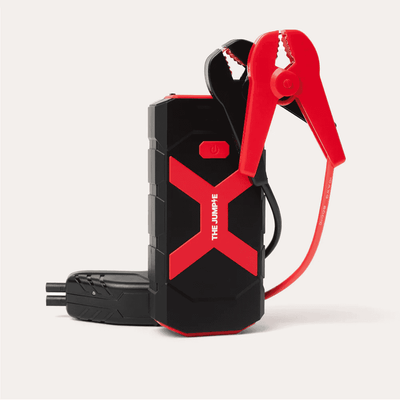
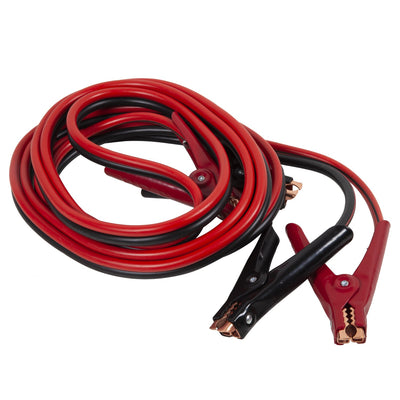
A dead battery always seems to happen at the worst possible moment. A portable jump starter fixes that in minutes, without needing a second car, a set of cables to another vehicle, or a wait for roadside assistance. This guide covers exactly how to use one safely, how to pick the right jump starter and jumper cables for your vehicle, and the mistakes that lead to a damaged battery or a shock instead of a running engine.
Quick Answer: How to Jump Start a Car
- Turn off the engine and set the parking brake.
- Clip the red clamp to the positive battery terminal.
- Clip the black clamp to bare metal, away from the battery.
- Turn on the jump starter and try to start the car.
- Once it's running, remove the clamps (black first) and drive for 20 minutes.
Full details, safety tips, and troubleshooting are below.
Before You Start: Safety Checklist
Run through this checklist every time, not just when something feels off, since most jump-starter injuries and battery damage happen from skipping a step under pressure:
- Read your vehicle's manual and the jump starter's manual. Some vehicles (particularly hybrids and EVs) have specific jump-starting instructions that differ from a standard gas engine.
- Put on safety glasses and gloves before opening the hood.
- Turn off the engine and all accessories, and set the parking brake.
- Inspect the battery terminals and clean off any corrosion before attaching clamps, since a poor connection is a common reason a jump doesn't take.
- Confirm your jump starter is charged and rated for your engine size (see the buying guide below).
Step-by-Step: How to Jump Start a Car with a Battery Pack
1. Preparation. Complete the safety checklist above before touching the clamps.
2. Connect the jump starter. Open the hood and locate the battery. Attach the red (positive) clamp to the positive terminal. Attach the black (negative) clamp to an unpainted metal surface on the engine block, away from the battery itself and away from any fuel lines.
3. Start the engine. Turn on the jump starter and give it a moment before attempting to start the car. If it doesn't start immediately, wait a few minutes and try again. Avoid cranking the engine for more than 5 seconds at a time, since that can strain the starter motor.
4. Disconnect and recharge. Once the engine is running, turn off the jump starter and remove the clamps in reverse order: black first, then red. Drive for at least 20 minutes to let the alternator recharge the car's battery, and recharge the portable jump starter once you're home so it's ready for next time.
Did that get your car started?
We're here to help either way.
Why You Need a Portable Jump Starter
Portable jump starters are a safety upgrade over the old two-car, cables-and-a-stranger method. Modern vehicles rely on sensitive onboard electronics, including engine control units, infotainment systems, and sensors, all of which can be damaged by an uncontrolled voltage spike from a poorly executed traditional jump. A quality portable jump starter like the Jumpie Portable Jump Starter delivers a controlled, regulated surge of power instead, with built-in protections designed specifically to protect your vehicle's electronics rather than just get the engine turning over.
It also means you're never dependent on finding a second running vehicle. A charged jump starter in your trunk turns a roadside emergency into a five-minute fix you handle yourself, rather than a wait for roadside assistance that can run anywhere from twenty minutes to well over an hour depending on your location and time of day, longer still in bad weather, when everyone else on the road is also calling for help. For anyone who drives regularly in areas with spotty cell coverage or long tow-truck response times, a portable jump starter is less a convenience item and more a basic piece of preparedness gear.
Choosing the Right Jump Starter and Jumper Cables
Not every jump starter or set of cables is built the same, and the wrong pick either won't have enough power for your engine or will wear out fast. A few things worth checking before you buy:
Cranking amps. This is the number that actually matters for whether a jump starter can start your specific engine. Larger engines, trucks, SUVs, and especially diesels, need a higher cranking amp rating than a compact sedan. Check your vehicle's cold cranking amp (CCA) rating and buy a jump starter rated above it, not right at it.
Jumper cable gauge and length. If you're buying standalone jumper cables (for use with another vehicle, or as a backup to a portable jump starter), look for 6-gauge or lower. Wire gauge numbers run in reverse, so a lower number means a thicker cable with less resistance, which matters for handling the high current a jump requires without overheating. A length of 16 to 20 feet gives enough slack to work between two vehicles that can't always park nose-to-nose. Insulated, well-clamped ends matter too, since a cable with a loose or corroded clamp is a weak link in the whole setup.
Storage. A jump starter or set of cables left loose in a trunk gets damaged fast: bent clamps, frayed insulation, and, on cold jump starters, avoidable capacity loss. A weather-resistant storage bag or the device's own protective case is worth using every time, not just when it's convenient.
Extra features worth having. Many current jump starters, including the Jumpie, add USB ports, a built-in flashlight, or an air compressor. None of that replaces the core job of starting your engine, but it does mean the same device can charge a phone or air up a low tire during the same roadside stop, worth factoring in if you're choosing between two otherwise similar models.
Two-Thirds of Drivers Never Test Their Battery Before It Fails
According to AAA, most drivers never have their car battery tested until it's already too late, leaving them stranded with no warning. A charged jump starter in your trunk turns that surprise into a five-minute delay instead of a roadside emergency.
Shop the Jumpie Jump StarterJump Starting Hybrids and EVs
Hybrid and electric vehicles are not jump started the same way as a standard gas engine. Most hybrids and EVs have a small 12-volt auxiliary battery that runs accessories and starts the system. That's the one you'd connect a jump starter to, never the high-voltage traction battery (identifiable by its bright orange wiring), which should only ever be serviced by a qualified technician. The 12-volt terminal location varies a lot by make and model, sometimes in the engine bay, sometimes in the trunk or under a panel, so check your owner's manual before you're stuck on the shoulder trying to find it; some manufacturers add dedicated jump-start terminals in the engine bay specifically to make this easier. One important rule: never try to jump an EV or hybrid using another EV or hybrid as the power source. Only a combustion-engine vehicle or a portable jump starter is safe for this, which is exactly what a device like the Jumpie is built for.
Common Mistakes to Avoid
Connecting the clamps in the wrong order. Always positive first, negative last on connection, and reverse that order when disconnecting. Doing it backward is one of the more common ways to cause a spark near the battery.
Grounding the negative clamp too close to the battery. Attach it to unpainted metal on the engine block, not near the battery itself, since batteries can vent small amounts of hydrogen gas, and a spark too close to the battery is a real risk, not a theoretical one.
Cranking too long. If the engine doesn't turn over within a few seconds, stop, wait a couple of minutes, and try again rather than holding the key or button down. Extended cranking strains the starter motor and won't fix a jump starter that isn't making good contact.
Skipping the drive afterward. A successful jump start doesn't mean the battery is fixed. It means the car is running. Skipping the 20-minute drive (or a follow-up battery test) is how the same breakdown happens again a day or two later.
Free download: Car Emergency Prep Checklist
Enter your email and we'll unlock the printable checklist, sourced from Ready.gov's own car safety guidance.
Roadside Safety Gear
Don't get caught with a dead battery again. Grab the Jumpie Portable Jump Starter and a set of heavy-duty jumper cables below.
While you're at it, a few other things are worth keeping in your trunk: LED road flares to make your car visible to other drivers, a tire air inflator for a slow leak, and a utility shovel in case you ever get stuck in snow or mud. See our full roadside safety gear collection or the 25-item car emergency kit checklist.