Fleet managers carry a lot of responsibility. They keep vehicles on the road, drivers safe, and operations compliant with federal and state rules. A well-stocked fleet vehicle emergency kit is one of the best low-cost tools for doing all three at once. This guide covers what belongs in a fleet-ready kit, the compliance rules that apply in 2026, the trends reshaping fleet safety, and how to choose the right setup for your operation.
Quick Answer: What Belongs in a Fleet Emergency Kit
- Essential items: jumper cables, a tire repair kit, warning triangles, a first aid kit, and a fire extinguisher.
- Federal requirement: 49 CFR 393.95 mandates a UL-listed fire extinguisher and three FMVSS 125 warning triangles per commercial vehicle.
- Specialized add-ons: insulated gloves and a voltage tester for EV fleets, ice scrapers and traction mats for cold-weather fleets.
- Bulk pricing and customization are available for fleets outfitting multiple vehicles.
Full breakdown, compliance detail, and trends are below.
Why Fleet Vehicle Emergency Kits Matter
Roadside breakdowns aren't rare for a fleet. They're close to a certainty. Tires alone account for roughly 53.5% of roadside breakdowns. Unplanned downtime typically runs $3,500–$5,200 per vehicle per year. Individual breakdown events can cost anywhere from $3,000 to $9,000 once you factor in towing, repairs, driver time, and lost revenue. A properly equipped emergency kit won't prevent every breakdown. But it can turn a multi-hour roadside ordeal into a 15-minute fix, and it lowers driver risk while help is on the way.
Key Benefits
- Minimizing downtime: quick roadside fixes get drivers back on schedule instead of waiting on a tow.
- Enhancing driver safety: the right tools and visibility gear for the first critical minutes after a breakdown or incident.
- Reducing costs: fewer tow fees, missed deliveries, and liability claims.
- Meeting compliance requirements: federal and state rules require specific emergency equipment on commercial vehicles. See the compliance section below.

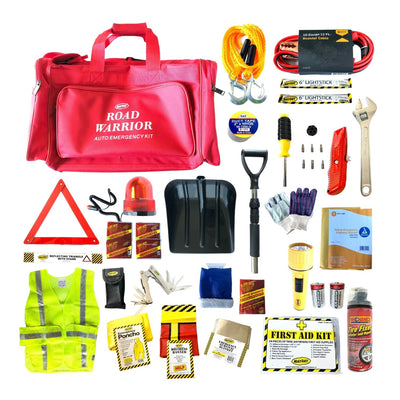
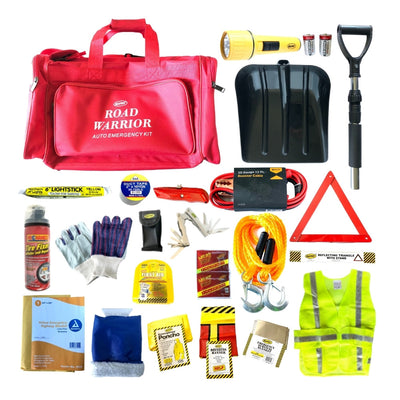
A fully stocked kit like the Deluxe Vehicle Emergency Kit covers first aid, roadside repair, and visibility gear in one case.
What Should Be in a Fleet Vehicle Emergency Kit?
Every vehicle in a fleet should carry a baseline set of emergency equipment, no matter its size or route. Browse our full lineup of vehicle emergency kits for pre-built and customizable options.
Essential items every kit should include:
- Jumper cables or a battery jump starter.
- Tire repair kit and portable air compressor.
- Reflective warning triangles (FMVSS 125-compliant).
- First aid kit with ANSI/ISEA Z308.1-referenced supplies.
- Flashlight and extra batteries.
- Multi-tool and basic hand tools.
- Emergency blanket and poncho.
- UL-listed fire extinguisher.
- Non-perishable snacks and water.
- Gloves, safety vest, and other PPE.
Additional items for specialized fleets:
- EV fleets: charging cables/adapters, insulated gloves, and a non-contact voltage tester.
- Cold-weather fleets: ice scrapers, snow chains or traction mats, and hand warmers.
- Long-haul and logistics fleets: extra fuel or fuel additive, a GPS tracker/beacon, and a CB or two-way radio.
How to Choose the Right Fleet Emergency Kit
Not every vehicle in a fleet needs the same setup. A few questions help narrow down the right kit for each vehicle class:
- What's the vehicle type and duty cycle? Light-duty sedans and vans need a compact kit. Heavy-duty trucks and long-haul routes need a larger, fuller setup.
- What's the climate and terrain? Fleets running through cold-weather regions or rural routes need cold-weather and traction gear added to the baseline kit.
- How many vehicles need to be outfitted? Standardizing on one or two kit setups across the fleet makes restocking simpler and compliance audits faster.
- What's the budget per vehicle? Bulk and fleet-volume pricing usually brings the per-unit cost down a lot, compared to outfitting vehicles one at a time.
Outfitting more than a handful of vehicles? Our team can put together a custom bulk quote based on your fleet's exact mix of vehicles and routes.
Fleet Compliance & Industry Standards
Commercial fleet emergency equipment isn't just best practice. Much of it is required by federal law. Under 49 CFR §393.95, every commercial power unit must carry a UL-listed fire extinguisher (minimum 5 B:C rating, 10 B:C for hazmat carriers) and three FMVSS 125-compliant reflective warning triangles. As of April 20, 2026, the FMCSA finalized a rule removing the older requirement to carry flares and spare fuses. Triangles and a charged fire extinguisher are still required, along with any state-specific equipment.
First aid kits aren't required by federal law for every commercial motor vehicle. But OSHA requires them for employers in general, and many state programs point to the ANSI/ISEA Z308.1 standard for kit contents. Key areas fleet managers should keep on their compliance checklist:
- OSHA and DOT requirements for safety gear and first aid provisioning.
- FMCSA regulations under 49 CFR §393.95 for emergency equipment on every power unit.
- State-specific mandates: some states require extra equipment, such as tire chains in winter conditions.
Regulations shift more often than most fleet managers expect. The 2026 flares and fuses change is a good example. Building a quarterly audit of emergency equipment into your maintenance cycle keeps the fleet compliant, without last-minute scrambles.
Our Team Can Help!
Request a Fleet QuoteFleet Emergency Preparedness: Key Trends & Best Practices
Predictive Maintenance & Telematics
Fleets using predictive diagnostics are seeing far fewer roadside incidents. Early data shows predictive maintenance programs can cut breakdowns by as much as 75% and cut unplanned downtime by roughly half. Telematics won't replace a physical emergency kit. But it does mean fewer surprises and more warning before a failure strands a vehicle.
The Shift Toward Electric Fleets
Commercial EV adoption is growing unevenly but steadily. Recent industry surveys found that 87% of fleet owners plan to add EVs within the next five years, and 90% of fleets that already run EVs plan to buy more. That shift means emergency kits increasingly need EV-friendly tools, like insulated gloves and voltage testers, alongside the usual roadside basics.
Autonomous Vehicles & Emergency Readiness
Even as driver-assist and autonomous systems cut human error on the road, fleets still need emergency plans for system failures, roadside incidents, and cybersecurity events. A physical emergency kit remains a low-tech backup that doesn't depend on connectivity.

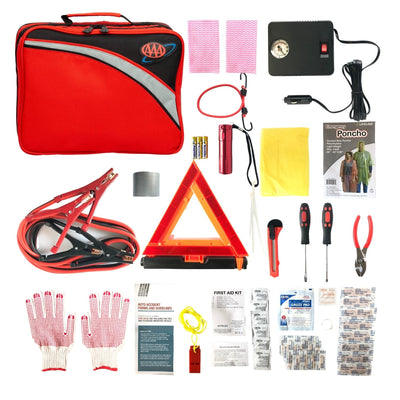
Compact, fleet-ready kits like the AAA Excursion Roadside Emergency Kit standardize easily across a mixed vehicle fleet.
How Safety Kits Plus Supports Fleet Managers
Safety Kits Plus specializes in high-quality, customizable fleet vehicle emergency kits built for corporate, government, and logistics fleets. Browse our roadside safety gear or explore the full vehicle emergency kits collection to get started.
- Customizable kits tailored to your fleet's specific vehicle mix and routes.
- Bulk order discounts for large fleets.
- Compliance-informed builds: we design kits with current DOT, OSHA, and FMCSA guidelines in mind, and work with your compliance team to match contents to your fleet's specific needs.
- Fast, reliable shipping on schedule.
- Dedicated fleet support to help you find the right solution for your operation.