No one plans to get stranded, but the numbers say it happens constantly: NHTSA recorded roughly 6.18 million police-reported crashes in the U.S. in 2024 alone, with about 2.1 million resulting in injuries. Add in the far more common non-crash breakdowns, such as dead batteries, flat tires, and overheated engines, and the odds that you'll need real roadside supplies at some point are high. This guide breaks down the 25 essential items every car emergency kit should have, organized by category, plus how to rotate your kit for the seasons and keep it actually ready when you need it.
Quick Answer: What to Pack in a Car Emergency Kit
- Mechanical gear: jumper cables, a portable jump starter, a tire gauge, and a spare tire with jack.
- Visibility and signaling: a flashlight, reflective triangles or flares, and a safety vest.
- Weather protection: a mylar blanket, seasonal clothing, and a rain poncho.
- First aid and health: a first aid kit, bottled water, and energy bars.
- Utility and backup power: a multi-tool, a power bank, and paper maps.
Full 25-item breakdown by category is below.
Why a Car Emergency Kit Is Non-Negotiable
The gap between a routine breakdown and a genuinely dangerous situation usually comes down to what's in your trunk. A dead battery in a well-lit parking lot is an inconvenience. The same dead battery on a dark rural road, in freezing weather, with no cell signal, is a real emergency. And it's the same failure. Having the right supplies on hand doesn't just fix the mechanical problem faster, it keeps you warm, visible, hydrated, and able to signal for help until it arrives.
"A driver that you have to sell on safety shouldn't be driving."
Kyle Petty, NASCAR Hall of Fame driver
The 25 Essential Items for Road Safety
To keep your kit organized and easy to navigate under pressure, these 25 items are grouped into five categories.
Mechanical & Roadside Assistance
Your first line of defense for common vehicle failures and getting back on the road.
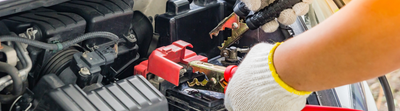
- Jumper cables: heavy-duty, 16-20 feet, 6-gauge or lower for a thick, low-resistance cable that handles high current without overheating.
- Portable jump starter: a self-contained lithium-ion power bank that starts your car without needing a second vehicle.
- Tire pressure gauge: digital or dial, to catch slow leaks before they become blowouts.
- Portable air compressor: a 12V inflator that plugs into your accessory outlet to top off a low tire or inflate a spare on the spot.
- Spare tire, jack, and lug wrench: the foundational trio for changing a flat. Check that your spare is actually inflated before long trips.
- Tire sealant (like Fix-a-Flat): a temporary aerosol fix to seal small punctures and get you to the nearest repair shop.
- Tow strap: a heavy-duty strap with secure hooks for pulling a vehicle out of mud, snow, or a ditch.
- Basic tool kit: a multi-bit screwdriver, adjustable wrench, pliers, and wire cutters cover most roadside fixes.
- Duct tape and zip ties: for securing loose trim, a dragging underbody shield, or bundling wires until you can get a real repair.
Visibility & Emergency Signaling
Staying visible to passing traffic is critical to preventing a second accident, especially at night.
- Bright LED flashlight or headlamp: for assessing engine trouble in the dark or changing a tire hands-free. Keep spare batteries with it.
- Reflective triangles or road flares: placed behind your vehicle to warn oncoming traffic that you're stationary.
- High-visibility safety vest: wear it any time you step out onto a busy roadside.
- Emergency whistle: to signal for help if visibility is obscured or you're away from your vehicle.
Weather Protection & Personal Comfort
If you're waiting out severe weather or stuck with a disabled vehicle overnight, these prevent exposure.
- Mylar emergency blankets: compact blankets that reflect body heat back to you, helping prevent hypothermia.
- Seasonal clothing layer (coat, hat, gloves): kept in the trunk specifically for working outside in bad weather.
- Rain poncho: lightweight, waterproof coverage for working on your car in a downpour.
- Durable work gloves: to protect your hands from sharp metal edges, hot engine components, and grease.
First Aid & Health Essentials
For managing minor injuries and unexpected delays.
- Comprehensive first aid kit: sterile gauze, adhesive bandages, antiseptic wipes, medical tape, tweezers, and scissors.
- Bottled water: for staying hydrated during a long delay, rinsing a wound, or cooling an overheated radiator.
- Non-perishable energy bars: shelf-stable, high-calorie snacks to maintain energy during an extended wait.
- Multi-purpose wet wipes: for cleaning grease off your hands after a repair or basic hygiene.
Utility, Navigation & Backup Power
Keeps your devices charged and your options open when standard infrastructure fails.
- Multi-tool: pliers, knife, can opener, and wire stripper in one compact tool.
- Backup power bank and charging cable: to keep your phone alive so you can coordinate with emergency services.
- Physical road atlas or paper maps: a backup for when cell towers are down or GPS fails in a remote area.
- Compact utility shovel: folding or short-handled, for digging out of snow, mud, or sand.
Choosing a Pre-Built Kit vs. Building Your Own
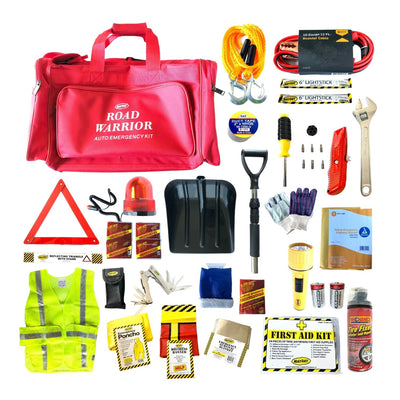
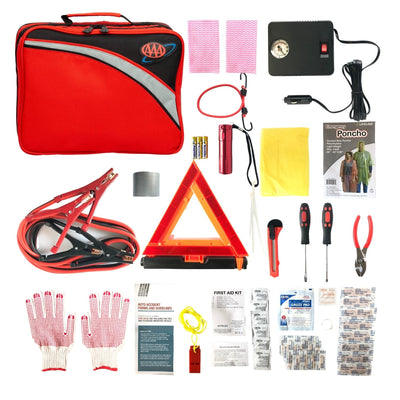
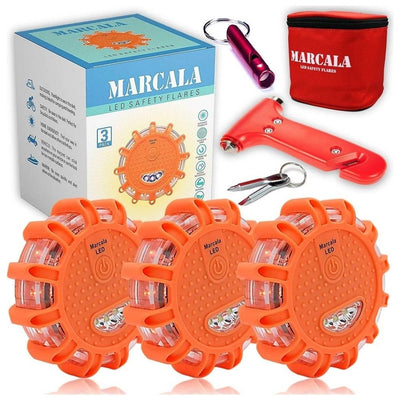
Sourcing all 25 items separately takes real time and, item by item, often costs more than a single pre-assembled kit. If you'd rather not build from scratch, a commercial-grade kit covers most of the list in one purchase. That's worth it whether you're outfitting one vehicle or a whole fleet. Below are a few of our most popular options, from a compact add-on to a full-coverage kit.
Browse our full vehicle emergency kits collection, or see our buying guide to the best ready-made kits if you'd rather compare pre-built options side by side.